Hudson River Borough Atop the Palisades
Welcome to Fort Lee, the Bergen County borough atop the Palisades, America's first film town and the New Jersey gateway to Manhattan across the George Washington Bridge.
Fort Lee sits in Bergen County, New Jersey, on the Hudson River, perched atop the Palisades cliffs directly across from Manhattan. It is a borough of about 40,000 people and one of the most urban, transit-oriented communities in the county, functioning as the New Jersey gateway to New York City through the George Washington Bridge, whose western terminus lies within the borough. The town holds a distinctive place in American cultural history. From roughly 1909 to 1918, Fort Lee was the center of the United States motion picture industry — the country's first film town — home to early studios and hundreds of productions before the industry moved west to Hollywood. That legacy is commemorated locally, but Fort Lee's modern identity is more commonly tied to its bridge and its skyline. Residential life is defined by the Palisades. A row of high-rise condominium and cooperative towers lines the cliff edge, their residents drawn by Manhattan views and a commute measured in minutes. Behind the towers, older streets of single-family homes and low-rise apartments preserve a more conventional borough character. Main Street anchors the borough's dining and shopping, reflecting a diverse, international population. Education is provided by the Fort Lee Public Schools, a pre-K through 12th grade district operating elementary schools, the Lewis F. Cole intermediate and middle schools, and Fort Lee High School. Commuters reach Manhattan by NJ Transit bus across the bridge — about 13 minutes to the bridge's bus station — or via routes through the Lincoln Tunnel. Fort Lee suits urban-minded households seeking dense, convenient living with dramatic views and the shortest possible bridge crossing into Manhattan.
Fort Lee is a borough in Bergen County, New Jersey, on the eastern edge of the county. It sits along the Hudson River atop the Palisades cliffs, directly across from Manhattan.
Fort Lee is known as America's first film town, serving as the center of the U.S. motion picture industry from about 1909 to 1918 before Hollywood's rise. Today it is also known as the western terminus of the George Washington Bridge.
Fort Lee sits directly across the Hudson River from Manhattan. Buses cross the George Washington Bridge to the bridge's Manhattan bus station in about 13 minutes, and NJ Transit routes reach the Port Authority Bus Terminal in roughly 35 minutes.
Fort Lee is served by the Fort Lee Public Schools, a comprehensive pre-K through 12th grade district. It operates a set of elementary schools, the Lewis F. Cole intermediate and middle schools, and Fort Lee High School.
The Palisades are the dramatic cliffs along the Hudson River's western bank, atop which Fort Lee is built. Palisades Interstate Park runs along the cliff edge, offering trails, overlooks, and views of the George Washington Bridge and Manhattan.
City Guide
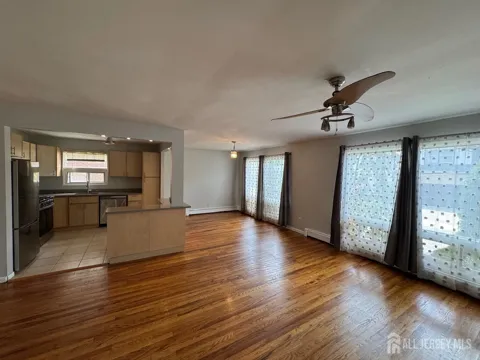
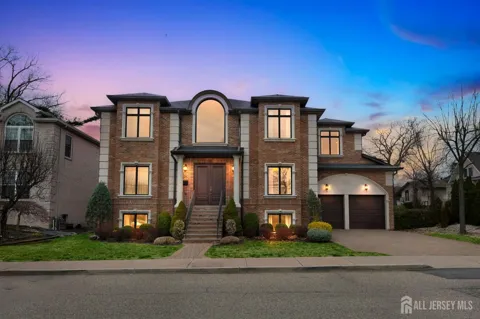
Fort Lee's housing is defined by density and views. The borough is dominated by high-rise condominium and cooperative buildings, many along the Palisades, offering studio-to-three-bedroom units with Manhattan skyline and Hudson River views. Landmark towers such as The Palisades, Horizon House, and The Colony anchor the skyline, alongside newer construction. Below the towers, older neighborhoods hold single-family and two-family homes, townhouses, and low-rise apartments from the borough's pre-war and mid-century growth. The market appeals to Manhattan commuters, downsizers, and investors seeking urban living and views at a distance of minutes from New York, with limited single-family inventory keeping the character distinctly vertical near the cliffs.
Fort Lee's neighborhoods climb from the riverfront to the Palisades. The high-rise corridor along the cliff edge — home to The Palisades, Horizon House, and The Colony — forms the borough's densest residential district, with buildings oriented toward the George Washington Bridge and the Manhattan skyline. The downtown and Main Street area hold the borough's commercial center, with restaurants, markets, and civic buildings. Older residential streets behind the commercial core contain single- and two-family homes and low-rise apartment buildings, giving parts of Fort Lee a more traditional Bergen County feel. Palisades Interstate Park runs along the cliff, separating the built environment from the dramatic drop to the Hudson.
Fort Lee offers a dense, cosmopolitan, transit-rich lifestyle on Manhattan's doorstep. The borough's high-rise residential towers fill with commuters who cross the George Washington Bridge daily, and its streets are lined with restaurants, cafés, and shops reflecting a notably diverse population. The dining scene is a regional draw, and the Palisades cliffs provide dramatic open space with Manhattan views. A quiet film-history undercurrent runs through the town — America's first film capital — while the George Washington Bridge looms as both landmark and lifeline. Life here is fast-paced, urban, and convenient, blending suburban Bergen County practicality with direct access to New York City.
Fort Lee is served by the Fort Lee Public Schools, a comprehensive community district covering pre-kindergarten through twelfth grade. The district operates a set of elementary schools — School No. 1 through School No. 4 — along with the Lewis F. Cole Intermediate School, Lewis F. Cole Middle School, and Fort Lee High School. The district reflects the borough's diversity, with a substantial majority of students from minority backgrounds, and is known for its academic programs and community engagement. For a borough of Fort Lee's density and proximity to New York, the local schools anchor family life and are a key consideration for households choosing the community.
Fort Lee's transportation is centered on the George Washington Bridge, whose western terminus lies within the borough. NJ Transit bus routes — including the 154, 156, 158, 159, and 182 — connect Fort Lee to the bridge's Manhattan bus station and the Port Authority Bus Terminal, with crossing times as short as 13 minutes and midtown rides of roughly 35 minutes. Local jitney buses add frequent service, and nearby Edgewater and Weehawken offer ferry options. The bridge itself carries pedestrians and cyclists across the Hudson. For drivers, the bridge links to Manhattan and the region's highways, though peak-hour traffic across the crossing is a familiar part of borough life.
Palisades Interstate Park is Fort Lee's defining open space, running along the cliff edge with trails, overlooks, and historic sites that frame the George Washington Bridge and the Manhattan skyline. The park's riverside paths and the borough's walkable streets provide everyday outdoor space, while the Hudson River and nearby Bergen County parks extend the options. Fort Lee's recreation is as much urban as natural: a deep dining scene, easy access to Manhattan's culture and entertainment, and community events. The George Washington Bridge itself offers pedestrian and bicycle access across the Hudson, connecting the borough to Manhattan's recreational and cultural resources within minutes.
MARKET SNAPSHOT
How homes have been selling here over the last 90 days.
Market data reflects closed sales over the last 90 days and is provided for informational purposes.
BROWSE BY ZIP
Browse listings by postal code in this area.